
OnlyFans offers no built-in search directory, so finding legitimate free accounts means working through external channels that already have verification habits in place. This guide explains why the platform works that way and gives you a repeatable screening process for locating no-fee pages without exposing your payment details or account credentials.
Because there is no native discovery feed, the entire ecosystem of directories, subreddits, and ranking sites exists to fill that gap. That gap is also where scams concentrate, since anyone can publish a list of links with no oversight. The sections below cover the architecture, the legitimate channels, the warning signs, and the screening routine.

Why OnlyFans Lacks Native Discovery Tools
Its architecture assumes the creator brings an audience from somewhere else and the platform simply handles billing, messaging, and content delivery. There is no recommendation engine, no tag system, and no browsable category tree inside the product.

You either already know a creator’s handle or you arrive through an external link.

The result is a parallel economy of ranking sites, aggregator pages, and community threads that index creators on the platform’s behalf. Some are maintained carefully with editorial standards, while others exist only to capture search traffic and redirect it toward whatever link pays best.
Free pages add another wrinkle. A creator with a $0 subscription earns through pay-per-view messages and tips instead of a monthly charge, so the incentive structure differs from paid pages. That means free listings attract a different class of scam operator, often one impersonating a known creator to collect PPV payments or redirect users off-platform entirely.
Verified External Channels for Free Account Location
The five categories below are ranked by how rigorously listings get checked before publication, from strongest verification to weakest.
- Creator-owned social media cross-links. The creator’s own Twitter, Instagram, or TikTok bio links directly to their page. This is the highest-confidence source because the creator controls both ends of the link.
- Subreddit communities with active moderation. Niche subreddits often maintain verified-creator flair and remove impersonation posts quickly. Check the moderation log and pinned rules before trusting a listing.
- Specialized aggregation sites with price history. Directories that track subscription price changes over time are harder to fake, because a fabricated listing rarely has a consistent historical record.
- Discord servers with identity verification. Servers that require creators to verify through a linked social account before posting carry moderate trust, though verification standards vary widely between servers.
- Newsletter or blog curations with editorial standards. Curated lists published by writers who disclose their method and update dates sit at the weaker end, since nothing forces accuracy after publication.
| Channel Type | Verification Level | Update Frequency |
|---|---|---|
| Social media cross-links | High — creator-controlled | Continuous |
| Moderated subreddits | Moderate to high | Daily |
| Aggregation sites with price history | Moderate | Weekly |
| Discord verification servers | Variable | Continuous |
| Curated newsletters and blogs | Low to moderate | Monthly or irregular |
The practical rule is to treat every listing as a lead rather than a fact. Even a well-moderated community can carry a stale link after a creator changes handles.
Red Flags in Unverified Free Page Listings
Scam listings share recognizable patterns. The indicators below appear repeatedly across impersonation accounts, fake directories, and misleading promotional pages, and any single one is enough reason to stop and verify.
- Mismatched profile imagery across platforms. The same photo appears under different names, or the profile picture does not match the creator’s established branding elsewhere.
- Absence of posting history. An account with a large claimed following but only a few days of visible posts is almost always fabricated.
- Pressure toward off-platform payment. Any request to pay through a direct transfer, gift card, or third-party wallet bypasses the platform’s protections entirely.
- Generic content lacking personal branding. Stock-style images and templated bios with no consistent voice suggest a template farm rather than a real creator.
- Comments disabled or heavily filtered. Removing the ability to warn other users is a strong signal that the listing has something to hide.
Tip: if a “free” page asks for a card number before showing any content, close it. A genuine free page sets the subscription price to $0, and any card verification hold on the platform itself is $0.10 and refunded within days.

When a creator raises their price, auto-renew stops automatically, and existing access continues until the paid period ends. If you subscribed at a promotional rate, the next cycle reverts to the base price, which is never below $4.99.
Cross-Platform Creator Legitimacy Verification
Run these five steps in order and you will catch most impersonation attempts before any money moves. Each step is quick, and together they take only a few minutes per creator.
- Matching handle consistency. The username should be identical or clearly related across every platform the creator claims to use.
- Timestamp correlation. Posts announcing a new page or promotion should appear on multiple platforms within a short window of each other.
- Content style fingerprinting. Lighting, framing, and editing style should stay consistent between free teaser posts and the paid page.
- Engagement pattern analysis. Real accounts show uneven engagement with replies and recurring commenters; bot-inflated accounts show flat, generic interaction.
- Third-party mention frequency. Established creators get referenced in forums, podcasts, or interviews outside their own channels.
A creator with genuine history will pass all five checks within a few minutes of browsing. If two or three fail, treat the listing as unconfirmed and move on rather than trying to resolve the discrepancy yourself. There is no shortage of verified free pages, so there is no reason to accept uncertainty.

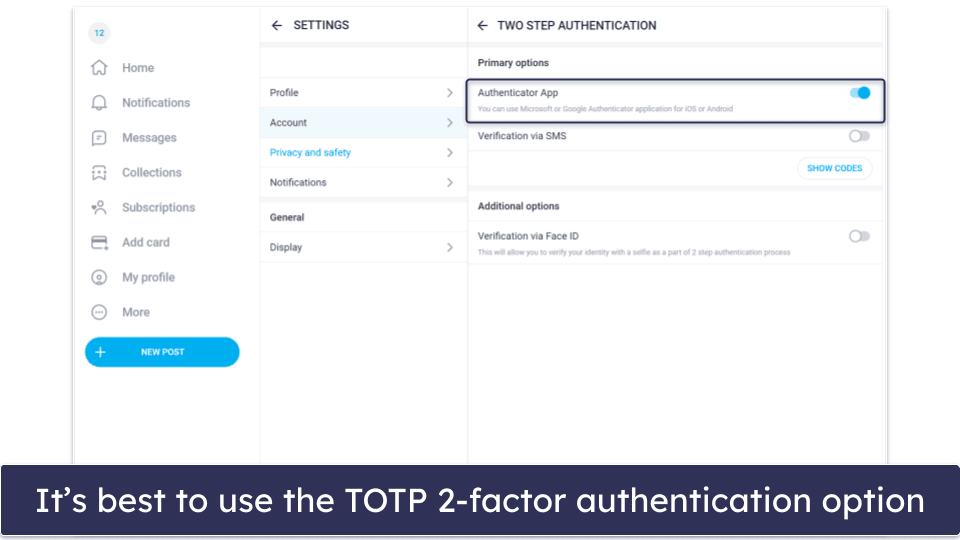
Two-step authentication is worth enabling before you begin browsing external directories at all.
Community Moderation Quality in Discovery Spaces
The five community models below are rated by how reliably they remove fraudulent listings and how quickly they correct stale information.
- Platform-affiliated forums. Highest trust. Official channels rarely host third-party listings, which limits volume but also limits exposure to scams.
- Niche interest subreddits. Strong trust when moderators enforce verified flair and publish removal rules. Check the rules page before posting or clicking.
- Creator self-promotion spaces. Moderate trust. Listings come from creators themselves, which reduces impersonation but removes independent vetting.
- Large unmoderated aggregators. Low trust. Volume is high and review is minimal, so fraudulent entries can persist for weeks.
- Paid directory services. Lowest trust. Payment for placement creates an incentive to list anyone who pays, regardless of legitimacy.
One useful habit is checking the age of the newest entry on any list. A directory that claims daily updates but shows a last-modified date from months ago is not maintaining its data. Cross-reference that against the platform’s own growth, which expanded sharply and steadily through the early 2020s.
Using BestOnlyFans Data for Pre-Subscription Screening
BestOnlyFans publishes its screening criteria, which makes it usable as a cross-check against whatever a creator’s own bio claims.
| Data Point | What It Reveals | Screening Application |
|---|---|---|
| Price history | Whether the page was ever paid and at what tier | Confirm base pricing sits at $4.99 or above for paid pages |
| Activity timestamps | How recently the creator posted or updated | Filter out dormant accounts before subscribing |
| PPV density indicators | How heavily the page relies on paid messages | Set expectations before joining a $0 page |
| Subscriber trend proxies | Directional growth rather than absolute counts | Distinguish active pages from abandoned ones |
| Promotional patterns | Frequency of discounted first months | Time a subscription to a promotional window |
A page listed as free today but showing a paid tier three months ago may be running a temporary promotion rather than operating as a permanent free account.
Paid chat commonly runs $3-$5 per message, PPV unlocks reach up to $50, and tips can go as high as $100. On a free page those are the actual revenue lines, so a listing that claims unlimited free PPV content is inconsistent with how the model works. A legitimate free onlyfans credit card guide will explain these mechanics rather than promise unlimited content.
The platform’s 20% fee applies to every transaction, with the creator keeping 80%. That uniform split means a creator’s decision to run a free page is a deliberate strategy, not a technical limitation.
Maintaining Security During External Discovery
Security during discovery is mostly about limiting what you expose before you have confirmed a creator is real.
- URL preview verification before clicking. Inspect the destination domain on any shortened or redirected link before opening it.
- Sandboxed browser use. Keep a separate browser profile for discovery browsing so tracking scripts do not follow you into your main session.
- Payment information isolation. Use a dedicated payment method for subscriptions and never enter card details on a third-party listing site.
- Screenshot policy awareness. Understand that screenshots of paid content may violate terms and expose you to account action.
- Account credential uniqueness. Use a password that appears nowhere else, since reused credentials are the most common route into compromised accounts.
Phishing attempts are the most frequent threat in this space. Fake login pages that mimic the platform’s sign-in screen collect credentials directly, and they are often hosted on domains that differ from the real one by a single character. Learning how to spot phishing attempts before entering credentials saves far more trouble than recovering an account afterward.

If a discovery site asks you to log in with your platform credentials, that is the clearest possible signal to leave. Report the site where possible and check the platform’s official help centre for guidance on account recovery if you already entered details.
FAQ
Can I trust free OnlyFans links found on Twitter or Reddit?
Treat them as leads, not confirmations. Links posted from a creator’s own verified account carry high trust; links posted by third parties in comment threads carry much less. Cross-check the handle against at least one other platform before subscribing or sending any payment.
How do I verify a creator’s free page is their real account?
Run the five-step sequence: handle consistency, timestamp correlation, content style, engagement patterns, and third-party mentions. A real creator passes all five quickly.
What should I do if a discovery site asks for my OnlyFans login?
Leave the site without entering anything. If you already submitted them, change your password immediately, enable two-factor authentication, and review your active sessions for unfamiliar devices.
How often does BestOnlyFans update its free page listings?
Update frequency varies by listing category, and pages with price history tracking refresh on a shorter cycle than newly added entries. Always check the last-modified date on any list before relying on it, since stale entries are the most common source of mismatched expectations.